CNC milling ensure precision in manufacturing
CNC milling ensures precision in manufacturing through a sophisticated interplay of automated control, rigid machine design, and meticulous calibration. This advanced subtractive manufacturing process relies on pre-programmed computer instructions to guide cutting tools with exceptional accuracy, minimizing human error and maximizing part consistency. The inherent design of CNC milling machines, with their robust frames and high-quality components, provides the foundational stability necessary for achieving tight tolerances.
At the core of CNC milling’s precision is its closed-loop feedback system. This system continuously monitors the position of the cutting tool and compares it to the programmed path. Encoders on each axis provide real-time data to the machine’s controller. If any deviation is detected, the system automatically makes instantaneous adjustments, ensuring the tool remains precisely on course. This constant monitoring and correction mechanism is vital for maintaining accuracy throughout the entire machining operation, especially during complex geometries.
Furthermore, the digital nature of CNC milling programming plays a crucial role in its precision. Designers create detailed CAD models, which are then translated into G-code, the language that directs the CNC machine. This digital blueprint eliminates the ambiguities inherent in manual machining, where human interpretation can lead to variations. Every movement, speed, and depth of cut is precisely defined in the G-code, ensuring that each part produced from the same program is virtually identical, a cornerstone of repeatable precision.
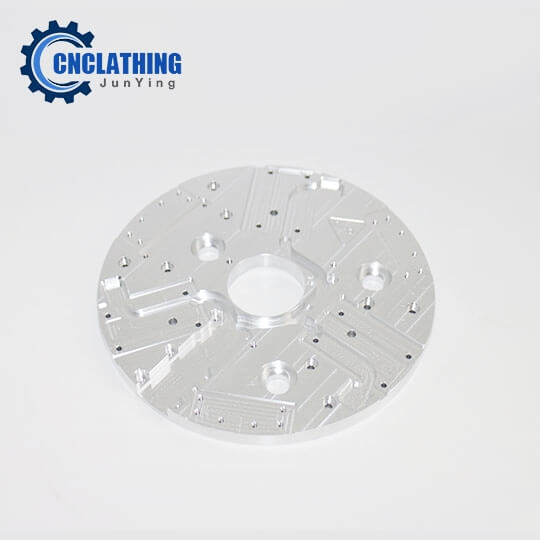
How does CNC milling ensure precision in manufacturing?
The rigidity and thermal stability of CNC milling machines also contribute significantly to their precision. High-quality machines are constructed from materials that resist vibration and thermal expansion, both of which can introduce inaccuracies. Modern CNC milling centers often incorporate features like advanced cooling systems to maintain a consistent temperature, preventing material distortion and ensuring that the machine’s dimensions remain stable throughout extended operations. This allows for sustained accuracy over long production runs. When executing operations like side milling, where the cutting tool engages the workpiece along its periphery to create flat surfaces or slots, the machine’s inherent rigidity is particularly critical to prevent tool deflection and maintain the desired dimensional accuracy and surface finish.
Tooling and workholding methods are equally important aspects of CNC milling precision. High-quality, sharp cutting tools are essential for clean cuts and minimal material deformation. Worn or improperly selected tools can lead to inaccuracies and poor surface finishes. Similarly, secure workholding ensures that the workpiece remains stable and does not shift during the machining process. Any movement of the material can compromise the accuracy of the cut, making robust clamping systems and fixtures vital for achieving the desired precision.
Finally, metrology and post-process inspection are integral to verifying and maintaining precision in CNC milling. Advanced measurement tools, such as coordinate measuring machines (CMMs), are used to inspect finished parts and ensure they meet the specified tolerances. This allows manufacturers to identify and address any deviations quickly, refining the CNC milling process for continuous improvement. The combination of precise programming, robust machine design, real-time feedback, and rigorous quality control collectively ensures that CNC milling delivers the exceptional precision demanded by modern manufacturing.